
Search California Criminal Records
California criminal records are held by several state and county agencies across the state. The Department of Justice keeps the statewide criminal history database. County superior courts store case files for every arrest and charge filed in their area. You can search these records online, by mail, or in person. The DOJ handles more than 2 million background checks each year through its Live Scan system. Courts in all 58 California counties run their own search portals for criminal case lookups. This guide covers where to find California criminal records and how to use each source.
California Criminal Records Quick Facts
California DOJ Criminal Records
The California Department of Justice runs the state's criminal record system. It stores arrest data, court results, and convictions for every person fingerprinted in the state. These files are called RAP sheets. RAP stands for Records of Arrest and Prosecution. The DOJ gets data from police, sheriffs, courts, and district attorneys across all 58 counties and hundreds of city police departments in California. More than 45,000 agencies feed into this system. They send arrest and case data to the DOJ on a rolling basis. RAP sheets are matched by fingerprints, which makes them the most reliable form of criminal history you can get in California. The DOJ main page for background checks at oag.ca.gov/fingerprints explains how the process works for agencies and the public.
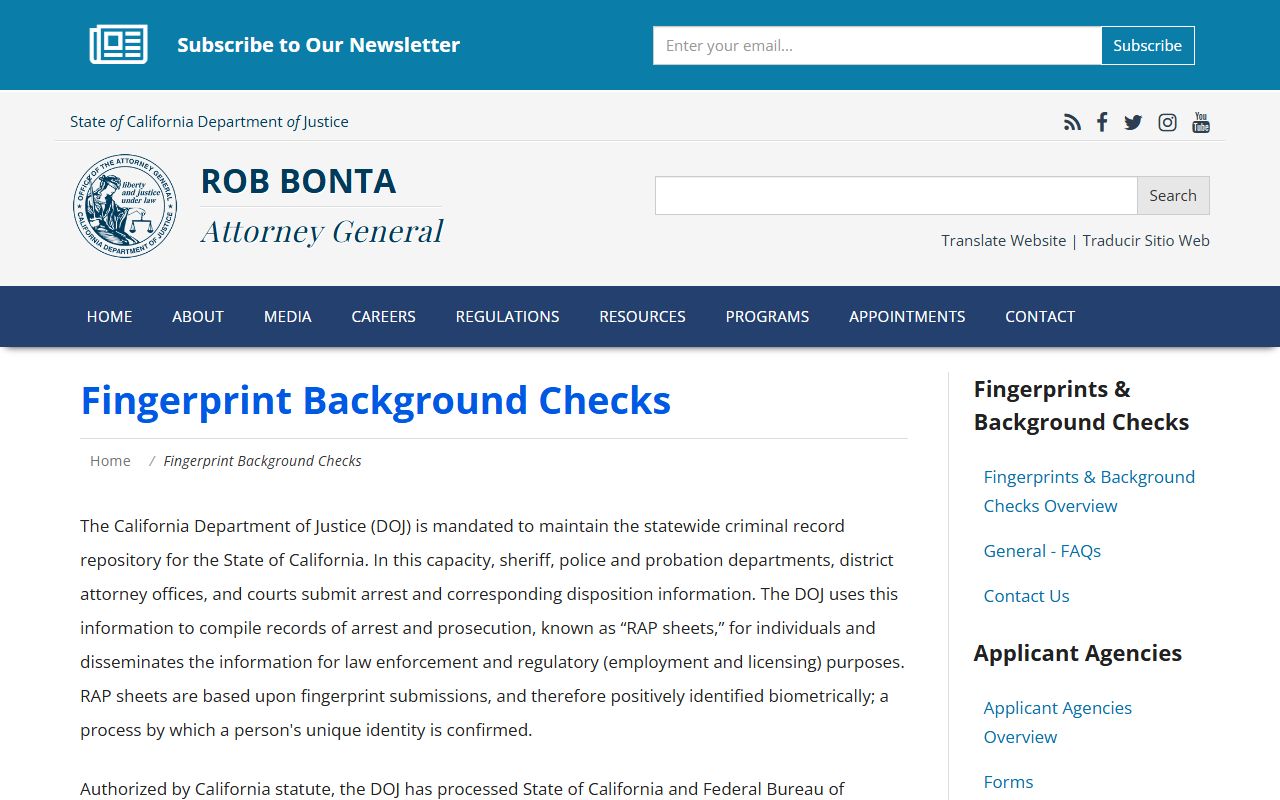
That page is the starting point for anyone who needs a criminal background check in California. The process begins when an applicant agency gives you a Live Scan form called BCIA 8016. You take that form to a certified Live Scan site. A fingerprint roller captures your prints and sends them to the DOJ electronically. Results come back in 48 to 72 hours when no matching criminal history is found. It takes longer when the system finds a record that needs manual review by a DOJ technician. You have the right to see your own criminal record under Penal Code Section 11105, which says the DOJ must let people review their own RAP sheet for accuracy and completeness. To request your record, submit fingerprints through Live Scan and pay a $25 fee using form BCIA 8016RR marked "Record Review." California residents must use Live Scan. Out-of-state residents can mail a fingerprint card on form FD-258 instead. Full instructions are on the record review page at oag.ca.gov/fingerprints/record-review.
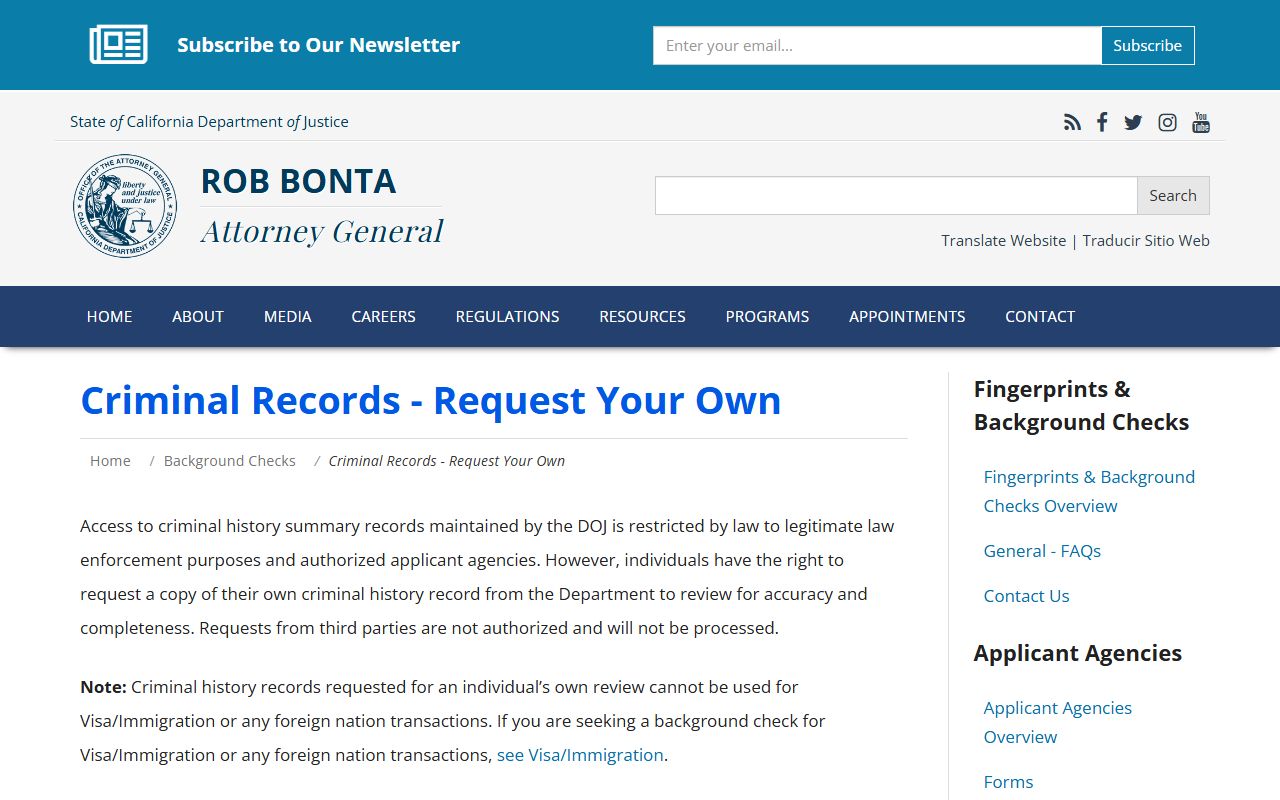
The review form lets you check your own criminal history for errors and file a challenge if something is wrong. You cannot share your RAP sheet with third parties. Penal Code Section 11142 makes it a crime to give your record to people who lack authorization, and civil fines apply on top of that.
Note: The DOJ does not offer rush processing for record reviews, so plan for at least 30 days before making a status inquiry.
How to Search Criminal Records in California
Live Scan is the main way people get criminal background checks done in California. Hundreds of Live Scan sites operate across the state. Some are at police stations. Others run out of private businesses. The state charges a fixed fee for DOJ and FBI checks, but each Live Scan site sets its own rolling fee on top. You must bring valid photo ID to your appointment. Expired IDs will not work. The DOJ Live Scan locator at oag.ca.gov/fingerprints/locations helps you find a certified site near you and shows each location's hours, address, and billing requirements.
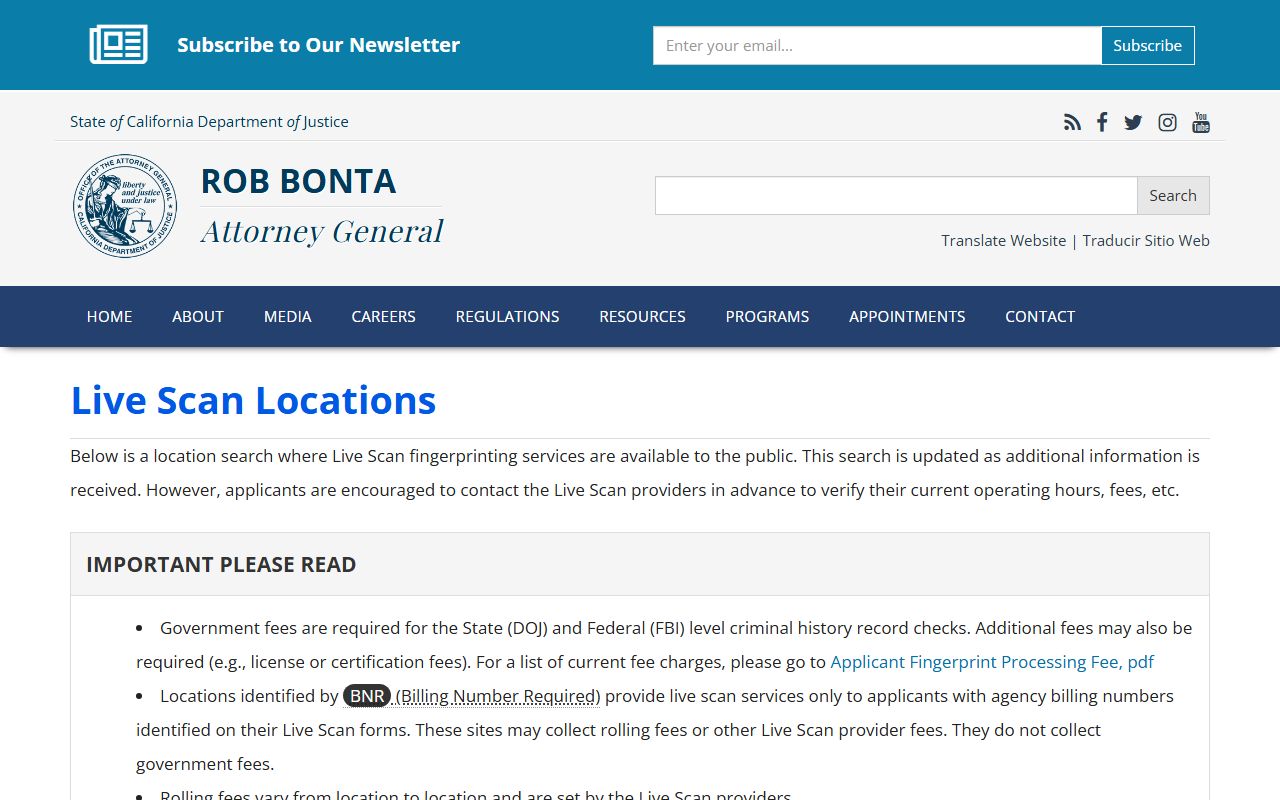
Each Live Scan site in the list shows whether it requires a billing number from your requesting agency, which matters if you are doing this for employment or licensing purposes. Sites marked BNR will only serve applicants with agency billing numbers on their Live Scan forms. Open sites accept walk-ins for personal record reviews.
After your fingerprints go to the DOJ, you can track the status of your criminal background check online. The applicant status portal at applicantstatus.doj.ca.gov shows where your request stands. You need your ATI number and date of birth to log in. The ATI is the transaction ID from your Live Scan session, so keep that number safe. The portal shows whether the DOJ received your prints and whether processing is done. It does not show the actual criminal history results or tell you what your record says. The OpenJustice data portal is a separate DOJ tool that gives statewide criminal justice stats on arrests, dispositions, and corrections trends across California.
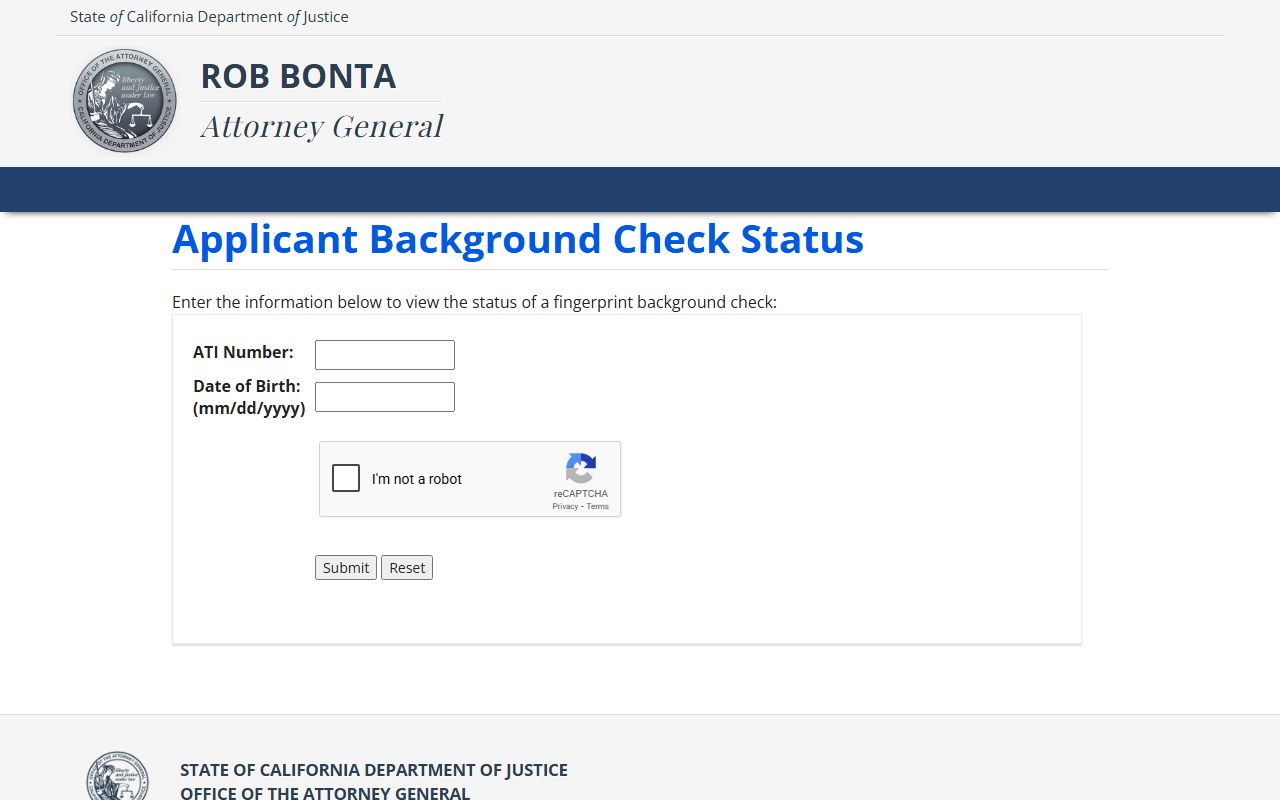
The status page tells you if your check is still in progress or done but will not display your actual criminal record results.
California Court Criminal Cases
California has 58 superior courts. Each county has one. Every criminal case filed in the state goes through a superior court, whether it is a felony, misdemeanor, or infraction. Court records are public in California. You can request copies of criminal case records unless a judge sealed the file or the law makes it confidential. Juvenile cases are always confidential. So are some domestic violence records. For everything else, you can view case files, get copies, and request certified documents from the county where the case was filed. The California courts site at courts.ca.gov/find-my-court helps you find the right superior court for your search.
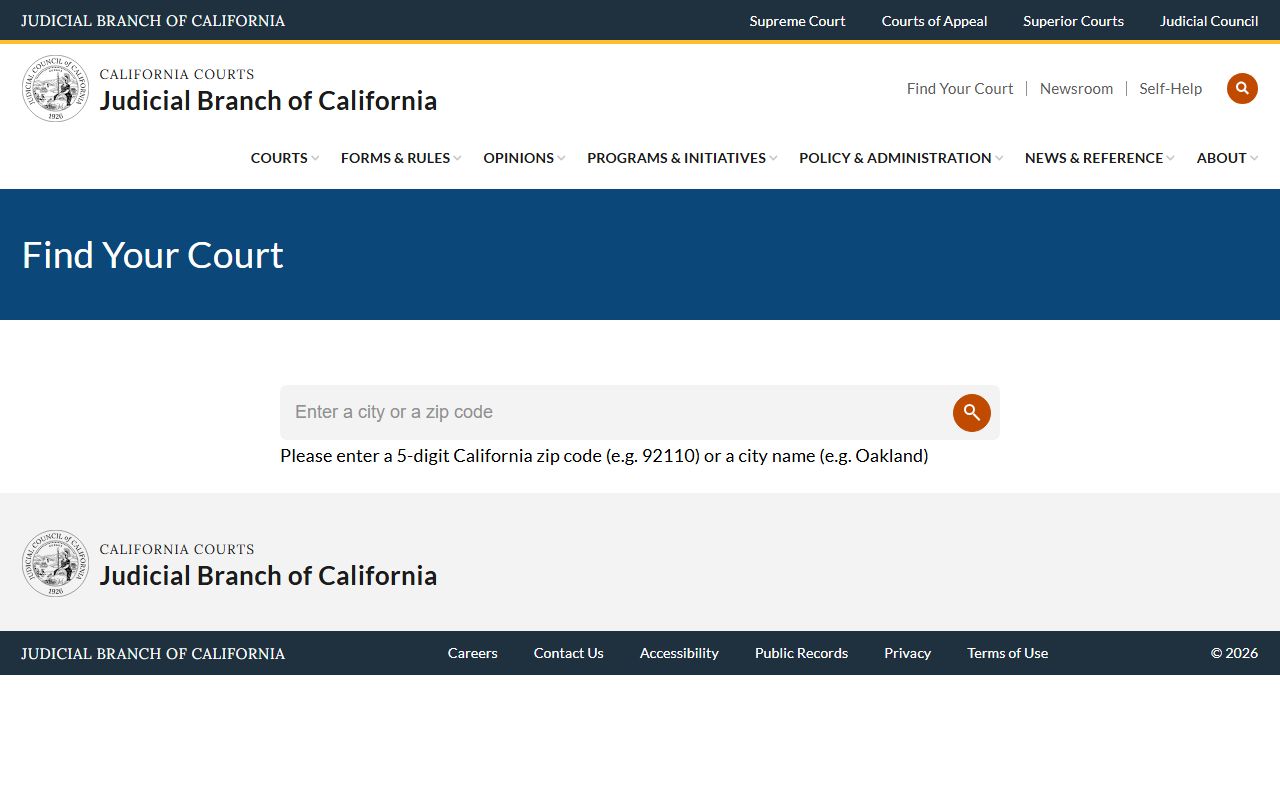
Use that tool to locate the superior court in any county where you need to look up a criminal case. Most California courts charge fees set by state law. Copies cost 50 cents per page under Government Code Section 70627. Certified copies run $40 under Government Code Section 70626. A name search that takes more than 10 minutes costs $15. Some courts have dropped online fees. Sacramento Superior Court no longer charges for online criminal case searches or document downloads. Each court runs its own web portal, so features and search tools differ from county to county.
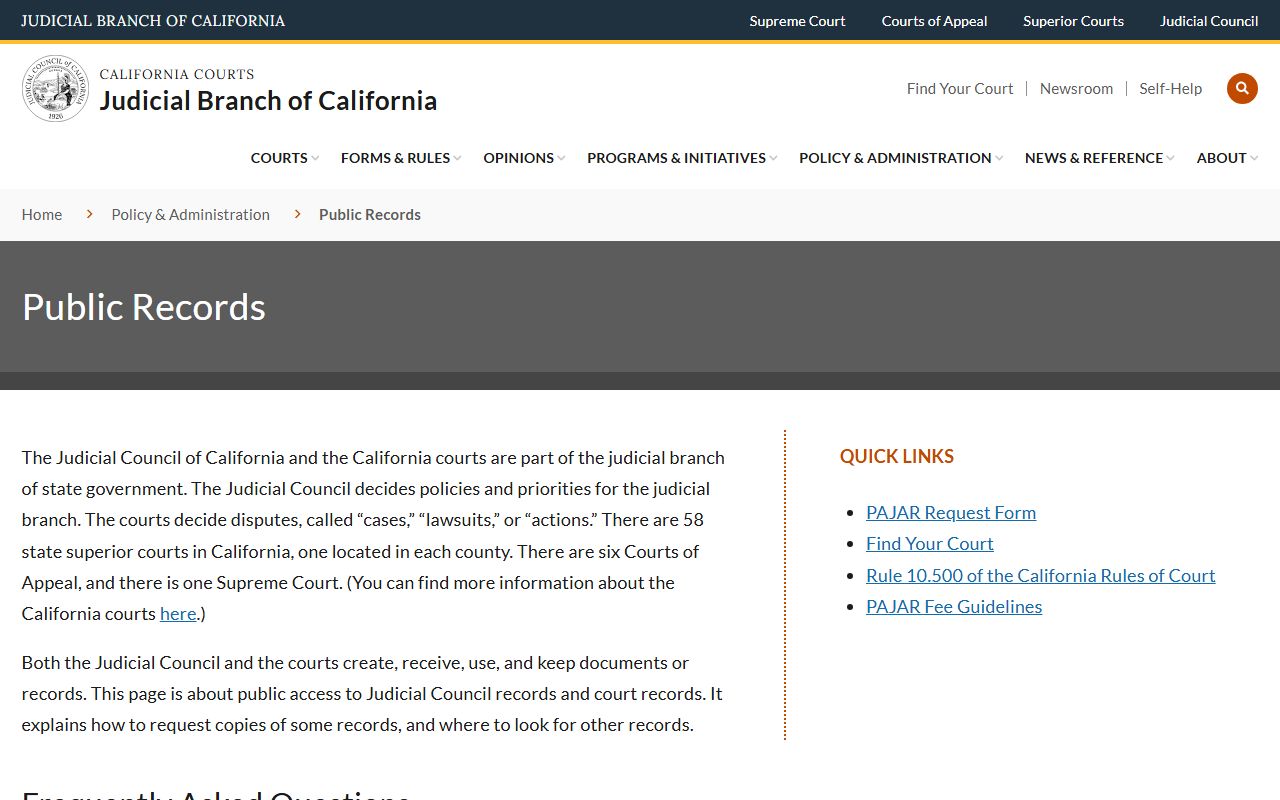
The public records page at courts.ca.gov/policy-administration/public-records covers how to request court records through the Judicial Council and what fees apply for administrative records. The Judicial Council handles statewide court administration but does not keep individual case files. You must contact the county court directly.
Note: Not all criminal case records are available online, especially older cases or those involving minors in California courts.
California Inmate Records Search
The California Department of Corrections and Rehabilitation runs the state prison system. CDCR keeps records on every person in state custody. You can search them through the California Incarcerated Records and Information Search, called CIRIS. It replaced the old inmate locator tool. CIRIS shows name, CDCR number, age, current facility, commitment counties, admission date, and parole hearing details. Search at ciris.mt.cdcr.ca.gov with a name or CDCR number. For broader records from the department, file a public records request through the CDCR portal at cdcr.ca.gov/pra.
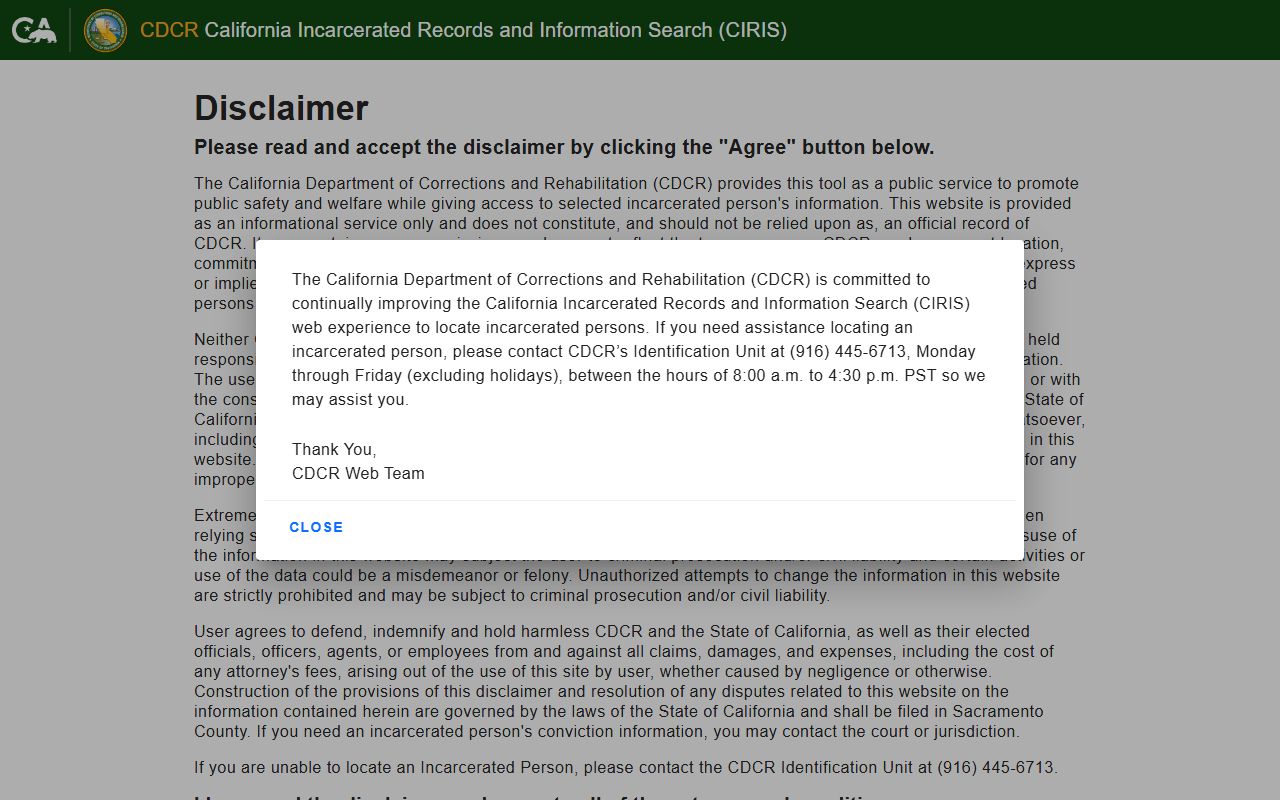
CIRIS covers state prison inmates only. County jails are separate. Each county sheriff runs its own jail and posts booking data on its website. If the person you are looking for is in a county jail, check the sheriff's site for that county. Most California counties have an online inmate search tool. Some update every few hours. Others update once per day. The quality of data varies by county, but all 58 California sheriff departments keep booking records that you can request.
Criminal Record Laws in California
California has several laws that let people clear or reduce past criminal records. The most common is Penal Code Section 1203.4, which covers what many call "expungement." If you finished probation for a conviction, you can petition the court to withdraw your guilty plea and dismiss the case. The conviction still shows on your RAP sheet but it reads "dismissed per PC 1203.4." This does not erase the record. It does not give back gun rights. It does not end sex offender registration. But it can help with job searches and housing applications in California.
If you were arrested but never convicted, California lets you seal those records. Penal Code Section 851.87 allows arrest record sealing when no conviction came from the arrest. This law came out of SB 393 in 2017. You do not need to prove factual innocence. It is much simpler than the older petition process under Penal Code Section 851.8. Sealed arrest records will not show on most background checks, which matters for people looking for work or housing in California.
Two ballot measures changed how California handles certain criminal records in a big way. Proposition 47 in 2014 turned some nonviolent drug and theft felonies into misdemeanors. Penal Code Section 1170.18 lets people with older convictions for those crimes petition for resentencing or redesignation. Proposition 64 in 2016 made recreational marijuana legal for adults 21 and older. Health and Safety Code Section 11361.8 lets people with past marijuana convictions petition for dismissal or resentencing. Both laws changed the criminal records of thousands of people in California by lowering the severity of past convictions or removing them in some cases.
None of these changes happen on their own. You must file a petition with the court in the county where your case was heard.
Sex Offender Registry in California
California runs a public sex offender registry through the Megan's Law website. The registry draws from the California Sex and Arson Registry under Penal Code Section 290.46. You can search by name, address, or map. Not every registered offender appears on the site. Some are left out per the statute. As of late 2025, the registry listed over 55,000 offenders with full addresses, more than 6,000 by ZIP code only, and about 11,600 with undisclosed locations. Search the registry at meganslaw.ca.gov for free without creating an account.
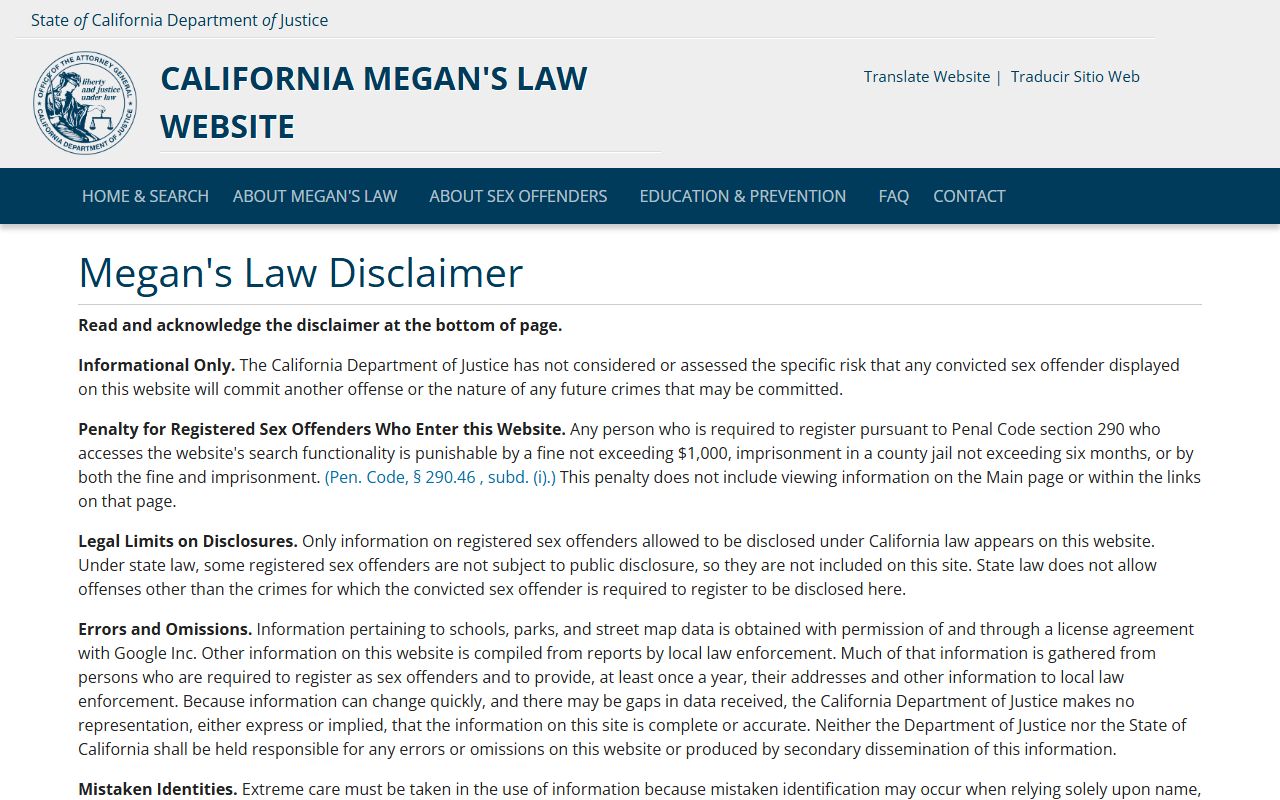
The registry is a tool for public safety. It helps California residents check whether sex offenders live in their area. Searches return photos, physical descriptions, and offense details when available. Registered offenders who access the search page face up to six months in county jail and a fine of $1,000.
Note: Using registry data for discrimination in employment, housing, insurance, or education is against the law in California.
Browse California Criminal Records by County
Each of California's 58 counties has its own superior court that handles criminal cases. Pick a county below to find local court info and criminal record resources.
Criminal Records in Major California Cities
Many California cities run their own police records divisions. Pick a city below for local criminal record information and resources.